
The First Ten Minutes: More To What Organisers Think Of Access Control
When attendees remember a great event, they usually talk about the headliner, the production, or the atmosphere in the room. When organizers remember that...
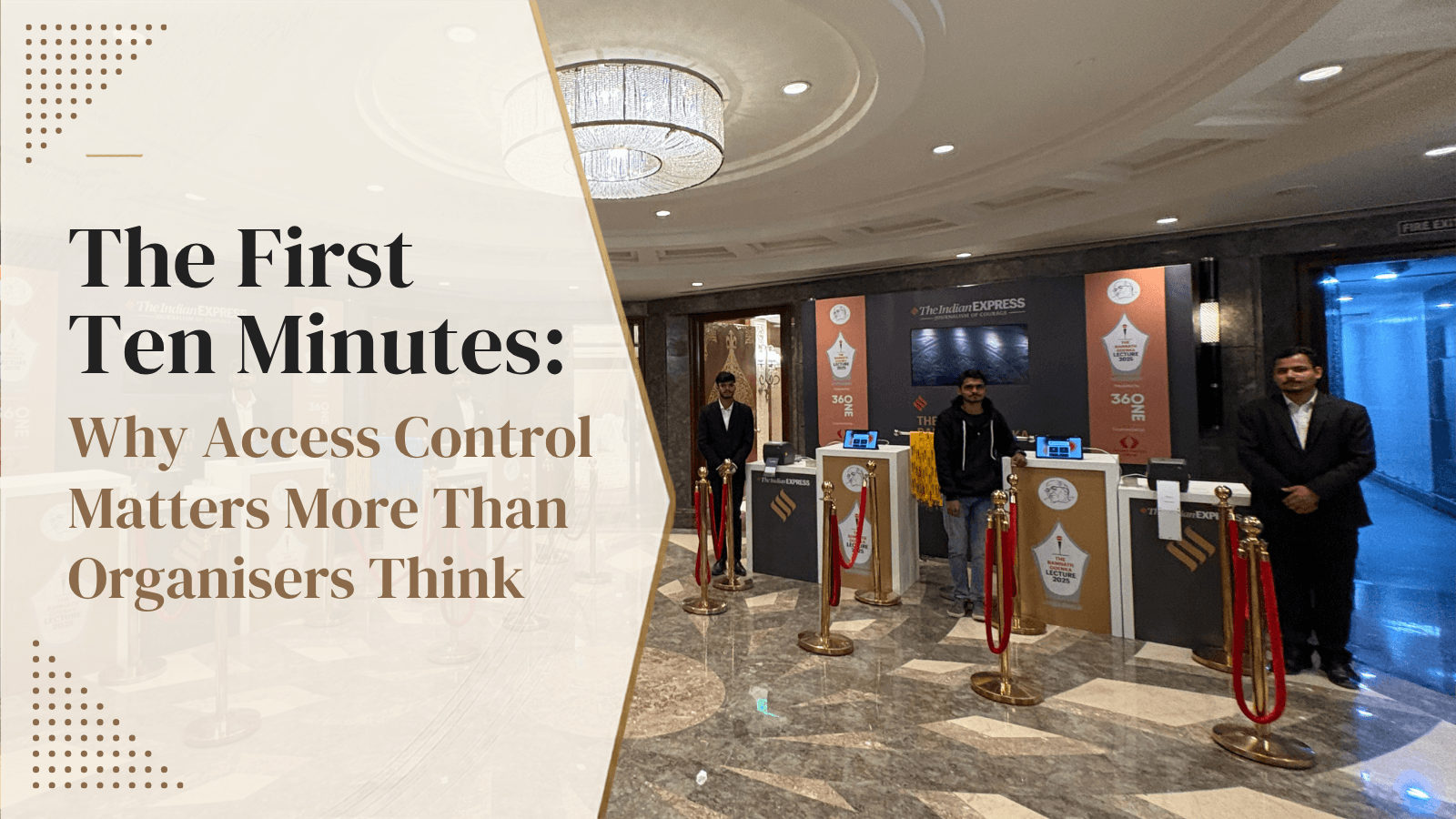
When attendees remember a great event, they usually talk about the headliner, the production, or the atmosphere in the room.
When organizers remember that same event, they replay something very different.
They remember the first gate slowing just as the crowd arrived. Security asking questions no one had answers to. VIPs stuck in the general queue. Crew members denied access they were promised. Radios lighting up before the program had even begun.
For the organizer, the event does not start with the opening act. It starts at the gate. And those first ten minutes often decide whether the rest of the day feels controlled or reactive.
This is where event management and logistics quietly succeed or fall apart.
At large-scale formats — zone constrained events like MEFCC, high-traffic trade exhibitions like the Fast Food & Café Convention Dubai, or unexpected attendee surges in Tira Korean Beauty Festival — the real stress test is not content or programming. It is access. Thousands of people arrive at once with different tickets, roles, and expectations, and everything depends on whether they step inside the event well.
The Layer Nobody Talks About
That pressure sits on one operational layer most people rarely talk about: access control.
Nobody appreciates it working, but in case of failure it becomes memorable.
The strongest organizers understand this early. Before choosing scanners, QR codes, or badge formats, they start with a few uncomfortable questions. Who needs to be on site, in which roles, and at what times? Which paths should intersect, and which should never cross? Where does flexibility matter, and where does it become a risk?
Answering these questions upfront often matters more than the hardware that follows.
From Ticket Stubs to a Single Access Backbone
In older setups, access control was mostly about ticket stubs and barcode scanners. Today, it stretches across the full registration system for events, from the moment someone signs up to the moment they leave the venue. An attendee may first encounter the event through an online event registration platform, receive confirmation or event tickets with QR codes, and arrive expecting entry to be quick and clear. On-site, that expectation is tested through scanning, onsite badge printing for events, and zone-level checks that decide where they can go and when.
Crew, vendors, exhibitors, media, and sponsors follow different paths, but the events that hold up under pressure do not treat these as side workflows. They treat access as a single backbone across attendees, staff, and operations. So when we talk about access control today, we are no longer talking only about who gets in. We are talking about who goes where, at what time, with which identity, and whether the system can explain those decisions instantly when something goes wrong.
Organizers often ask whether access control is really different from ticketing. Ticketing creates the promise. Access control determines whether that promise survives contact with reality.
What Good Access Design Does for Attendees
When access is well designed, it almost disappears. But its effects show up everywhere. The experience begins at the queue. Clear entry points, quick scanning, and simple communication calm people down before they even step inside. Attendees who enter with ease, arrive earlier, engage more freely, and are far more forgiving of minor delays later in the day. This holds true whether you are evaluating ticketing software for Indian festivals with heavy walk-in traffic, working with event tech companies in UAE for a business summit, or running touring shows across multiple venues. The psychology is consistent: calm entry creates calmer audiences.
Safety at Scale Runs on Information
Safety at scale is less about instinct and more about information. Real-time check-ins show how many people are inside, which gates are under pressure, and which zones are nearing capacity. When this data lives inside a connected access layer instead of scattered spreadsheets, operations teams can slow a gate, open an alternate route, or delay a program item without guessing. Control comes not from rigidity, but from visibility.
How Access Shapes Revenue
Revenue is shaped by access more than most teams realise. Every minute someone spends stuck outside is a minute they are not exploring, engaging, or spending. When people enter earlier and more confidently, they buy more food, merchandise, upgrades, and add-ons. When credentials double as payment instruments, the friction drops further. For organizers exploring the benefit of cashless payment or implementing cashless payment systems for festival formats, this link matters. The same identity that opens the gate can also open the wallet, reducing queue abandonment and simplifying reconciliation after the event.
Choosing an Access Method That Fits the Format
There is no single access method that works for every format. For smaller conferences or indoor business events, QR codes for events paired with a solid registration system for events are often enough. Attendees register online, receive a code, and move through entry quickly. For larger festivals, expos, and multi-day shows, more durable credentials make sense. Wristbands or badges designed for repeat use allow faster peak-time scanning, easier re-entry, and cleaner separation of backstage, VIP, and public zones. These formats also integrate naturally with payments and tickets for festivals, reducing the need for people to juggle multiple identities.
Crew and contractors usually require tighter control. They may be onboarded in bulk, issued photo-based credentials, and given highly specific permissions tied to time and location. Exhibitors and their teams sit somewhere in between, often needing controlled access alongside lead capture and movement tracking. Each scan becomes both a security check and a data point.
Planning for Events Over 10,000 Attendees
As events cross 10,000 attendees, access control shifts from a nice-to-have to core infrastructure. The most reliable plans do not begin with devices. They begin with mapping behaviour. Who arrives early. Who stays late. Who needs flexibility. Who must never be delayed. Once that logic is clear, ticketing, box office ticket booking, staff passes, exhibitor credentials, and sponsor access can all sit on the same access matrix instead of being patched together from different systems.
Execution then becomes the focus. Reliable scanners and printers. Clear signage. Staff who understand not just how to scan, but why certain decisions exist. Contingency plans for shared devices, peak surges, or unstable connectivity. Large events that run finely are rarely built on perfect conditions. They are built on systems designed to keep working when conditions are imperfect.
What the Access Data Tells You Afterwards
After the gates close, access data becomes a strategy. Entry patterns, dwell times, zone popularity, re-entries, and drop-offs inform better planning for the next edition. What begins as access control turns into institutional memory.
Across regions, the questions stay the same. Whether you are comparing event tech companies in UAE, planning large Indian festivals, or running international exhibitions, the challenge is consistent. How do we let the right people in, quickly and safely? How do we maintain control without making the experience feel rigid? How do we ensure staff, vendors, and exhibitors reduce confusion instead of adding to it?
Designing the First Ten Minutes
Access control is rarely the star of the show. It should not be. Its job is to quietly absorb pressure so that programming, content, and community can do their work.
If you are planning a large-scale event and already thinking about line-ups, sponsors, or set design, it is worth pausing to ask one simple question: what will the first ten minutes feel like for the people arriving?
Designing that moment deliberately — across registration, access, staff flows, and payments; gives everything else a better chance of working the way you intend. Starting with a stronger access plan, rather than treating it as an afterthought, is often what separates events that merely open their gates from those that actually feel in control.
Running an event and need a secure, trusted platform? Talk to TicketRoot →